- Copied
Grand Japan
Oct 5, 2027 — Oct 15, 2027
Starting from
TOKYO → KOBE / KYOTO
10 Nights on Star Seeker
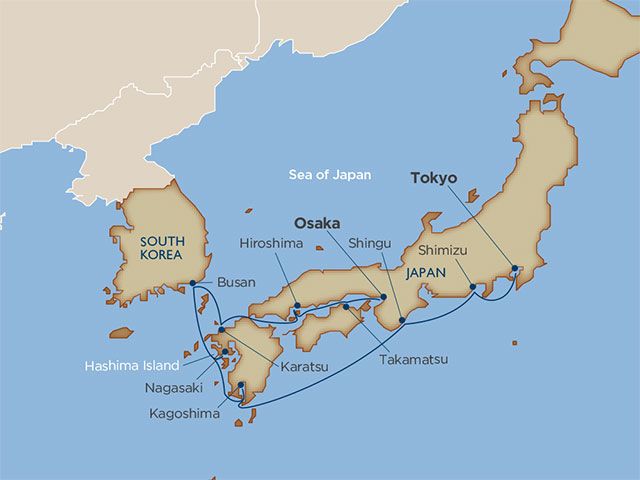
Immerse yourself in Japan’s unique culture — celebrate a respect of order, harmony, and self-development as you embrace new technologies and celebrate ancient traditions. Admire Tokyo’s sparkling skyline bathed in glowing pastel neon lights. Indulge in Takamatsu’s tiny restaurants and generous portions of sizzling chicken, steaming noodle bowls and mysterious seafood pieces shrouded in delectable fried batter. Experience the beauty of Japan’s Inland Sea and join a jostling crowd in an aromatic Shimizu seafood market. This voyage remains one of the most highly personalized and authentic explorations of Japan’s iconic islands at the edge of the Far East.

Popular Highlights
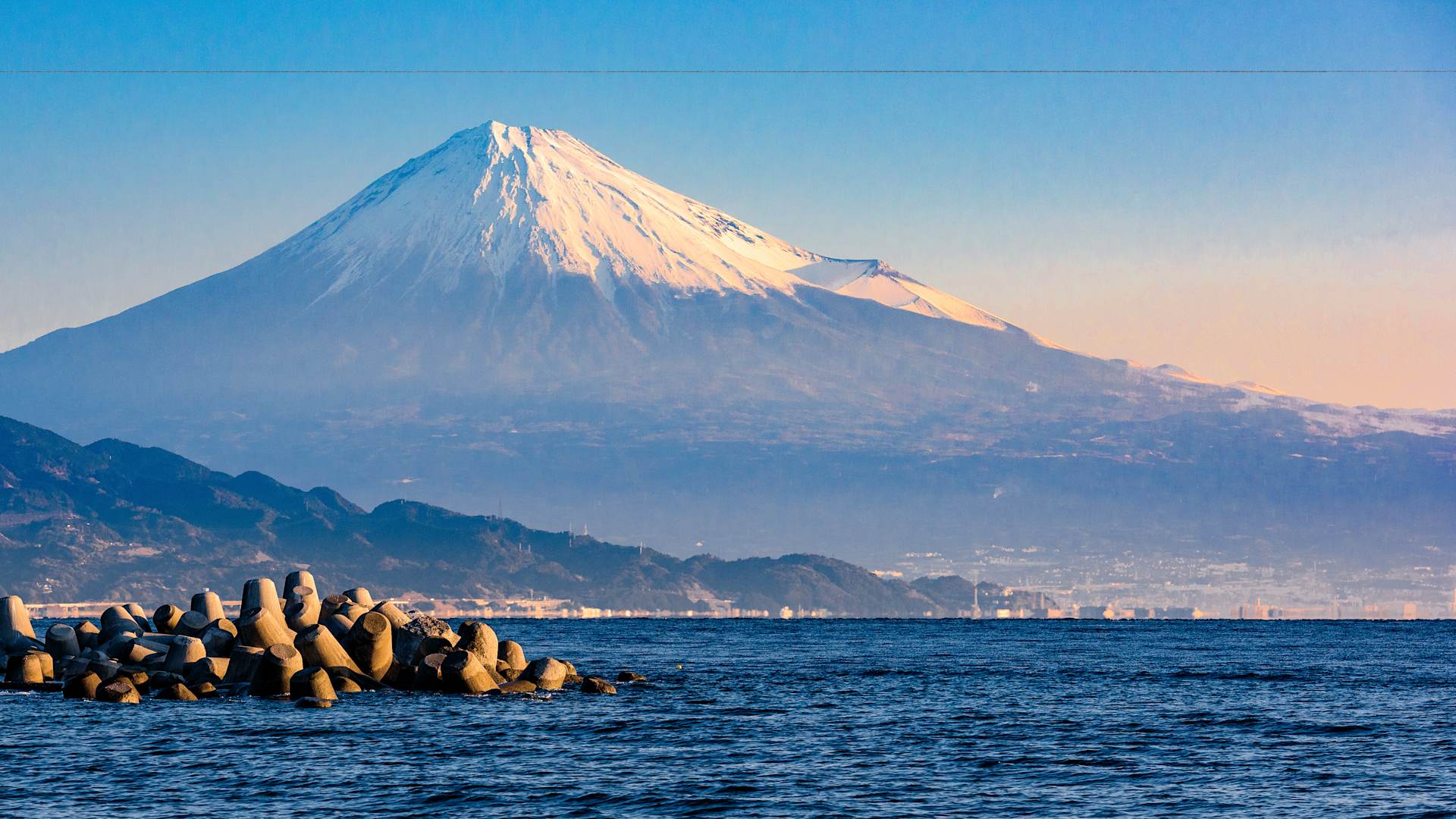
Discover the beauty of UNESCO site Mount Fuji, Japan's highest mountain, when you get to Shimizu.
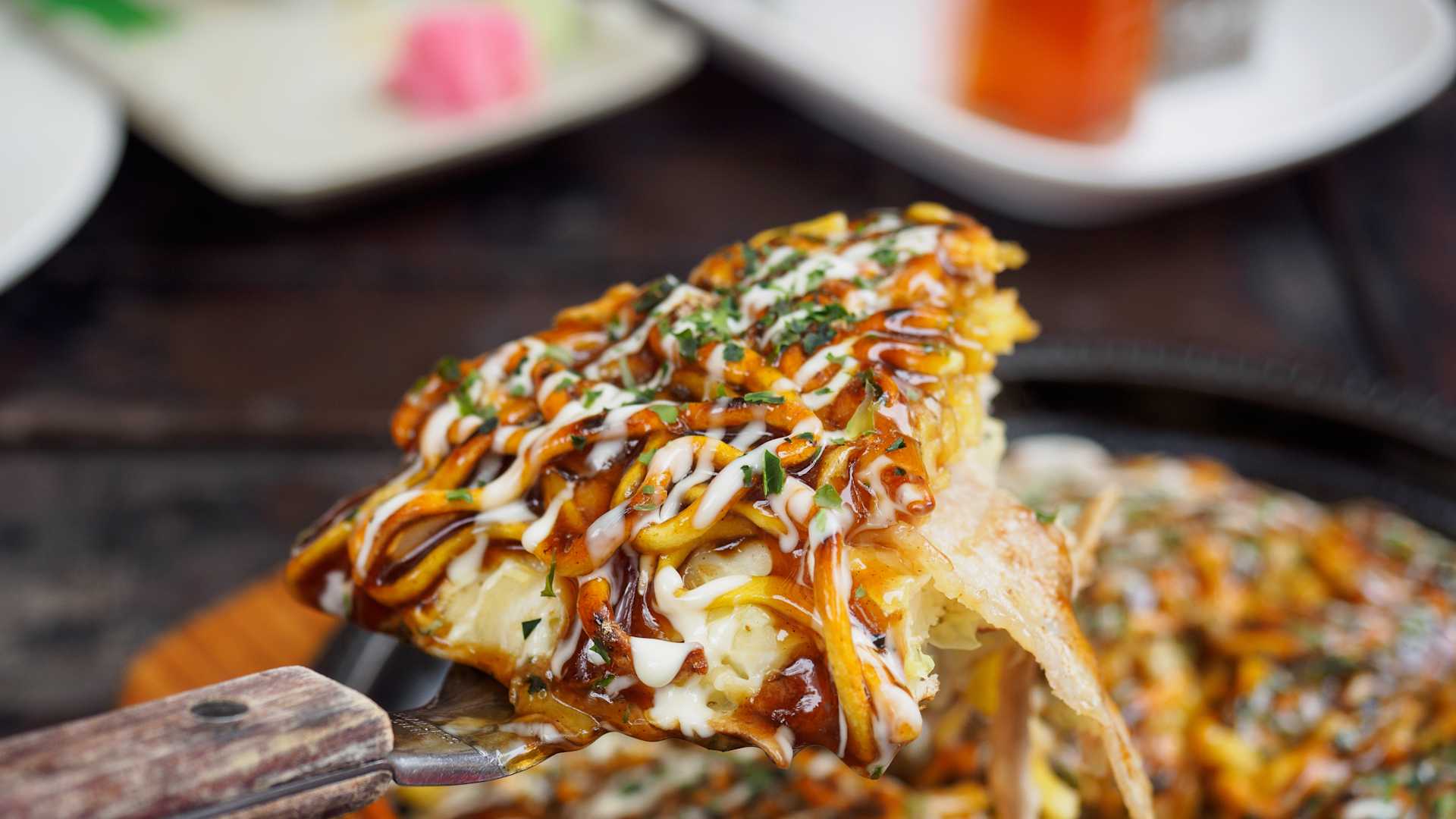
Enjoy the cuisine of Hiroshima, with not-to-be-missed Okonomiyaki savory pancakes.
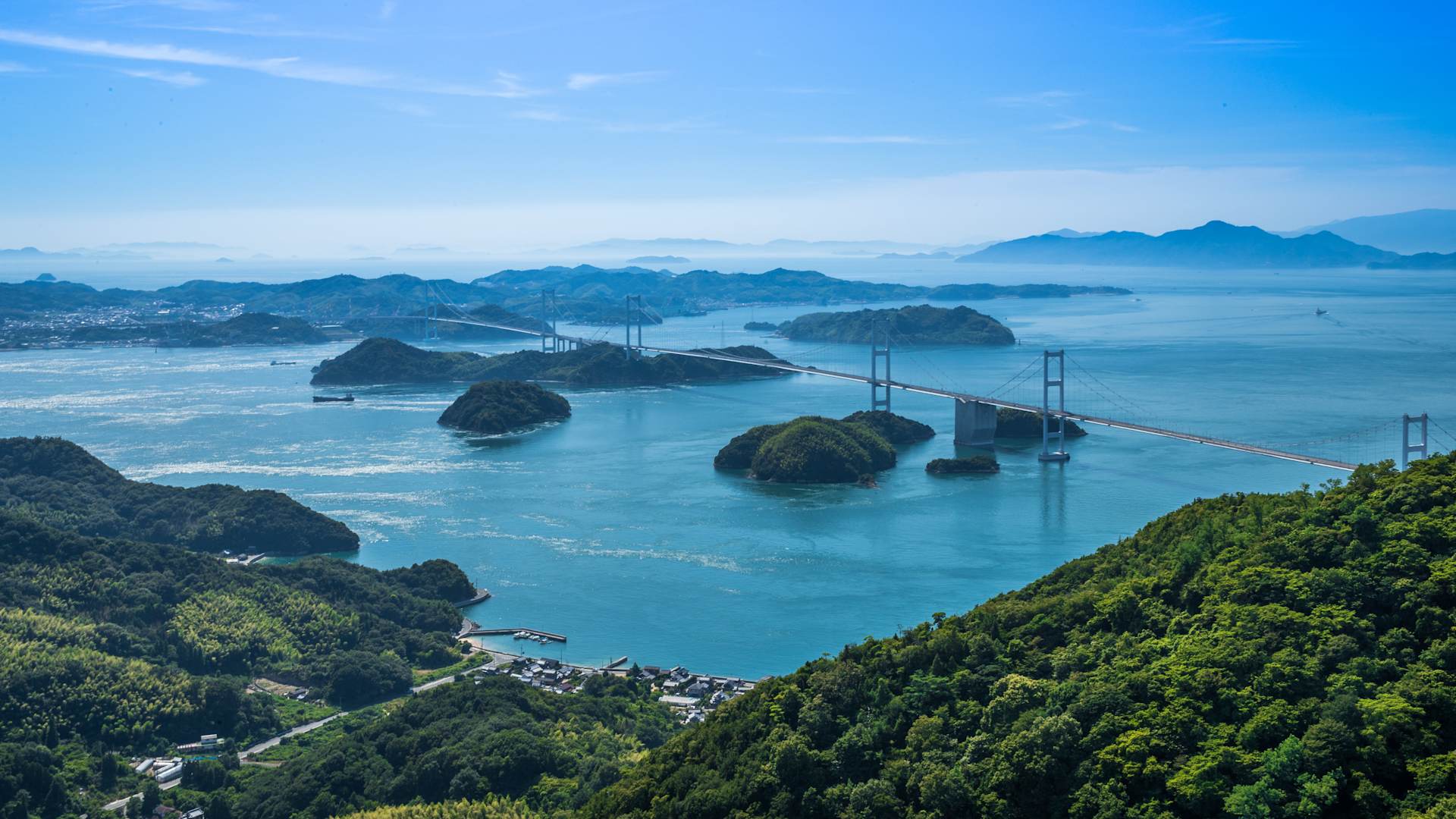
Absorb the scenic beauty of Japan’s Inland Sea, a yacht exclusive.
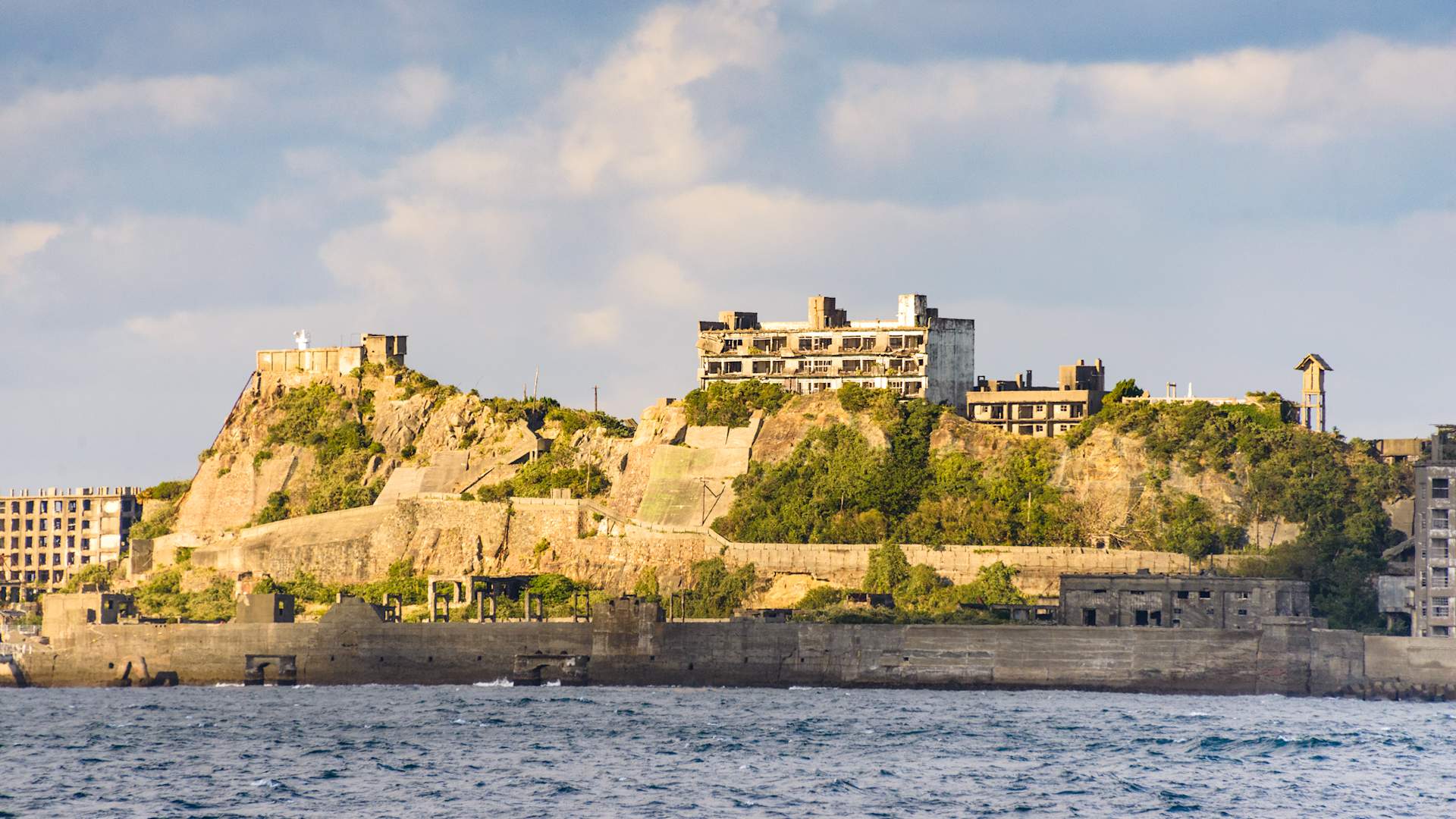
Take in the scenery as you cruise around the abandoned island of Hashima, near Nagasaki.
Respectfully remember lives lost at the Peace Memorial Parks of Nagasaki and Hiroshima.
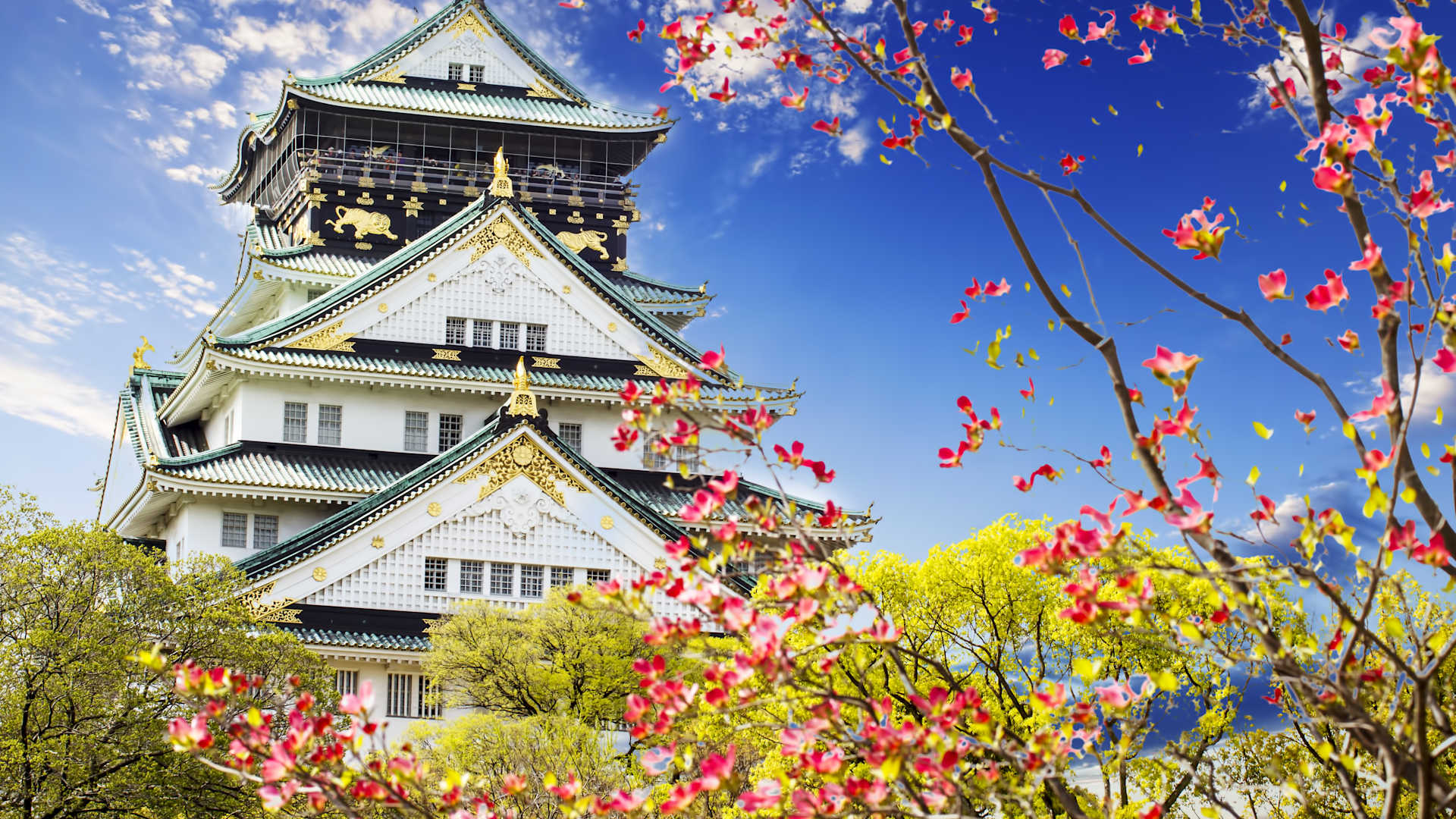
See 16th century Osaka Castle, the city’s main historic landmark.
Shimizu, Mt. Fuji Highlight
Shimizu, Mt. Fuji Highlight
You will board your motor coach at the port, and drive to Fujisan Hongu Sengen Taisha Shrine , located in the southwestern foothills of Mount Fuji . Originally built to offer protection from volcanic eruptions, the shrine was one of the grandest in its day. Constructed in the early 1600s, the shrine has been hit by several earthquakes, damaging its structure. The grounds are quite picturesque, and over 500 cherry trees bloom here in March and April. You will drive to the quaint fishing town of Yui, home to the Tokaido Hiroshige Art Museum next. The museum displays more than 1,300 ukiyo-e exhibits, spotlighting the works of Hiroshige Utagawa (1797-1858), one of the best-known ukiyo-e artists who strongly influenced the genre with his dramatic landscape series. After having lunch at a local restaurant, your final destination of the day will be Miho-no-Matsubara, a picturesque pine grove along the eastern coast of the Miho Peninsula, given the distinction of "New Three Views of Japan," a designation of scenic beauty. This inspirational spot for artists offers dramatic views of Mount Fuji, and if you walk deep into the pine grove, you'll spy a 650-year-old Japanese black pine called Hagoromo-no-Matsu, believed to have mythical origins, its branches spread in every direction, and it is said that an angel bathing in the waters hung her clothes on its branches. A fisherman took the garments, and the angel had to win them back by dancing for him. Beside this legendary tree, there stands a monument of a French ballerina who composed a dance inspired by this legend. Please note : The path from the parking lot to Miho no Matsubara is about half a mile. It is wheelchair accessible. Mount Fuji can be seen, weather permitting. The order of the tour sites may vary. Wear comfortable walking shoes and conservative clothing and bring local currency.
Shimizu, Mt. Fuji Cultural Experience
Shimizu, Mt. Fuji Cultural Experience
You will ride to the quaint fishing town of Yui , home to the Tokaido Hiroshige Art Museum . The museum displays more than 1,300 ukiyo-e exhibits, spotlighting the works of Hiroshige Utagawa (1797-1858), one of the best-known ukiyo-e artists who strongly influenced the genre with his dramatic landscape series. After touring the museum, continue on to a tea ceremony in Miyuki-tei at a "chashitsu," a historic tearoom, in Yui Honjin Park. In the Japanese culture, a tea ceremony is not just about the beverage; it's a cultural ritual that brings tranquility and peace to the participants. You will be served Japanese green tea, called matcha, accompanied by some sweets, which balances out the flavors of the tea leaves. Your host will be gracious, preparing your tea with great care and attention to aesthetics. Complete your day at Miho-no-Matsubara, a picturesque pine grove along the eastern coast of the Miho Peninsula, given the distinction of "New Three Views of Japan," a designation of scenic beauty. This inspirational spot for artists offers dramatic views of Mount Fuji, and if you walk deep into the pine grove, you'll spy a 650-year-old Japanese black pine called Hagoromo-no-Matsu. After a day of beauty and cultural sights and hopefully a camera filled with wonderful memories you'll board your coach for your return trip to the ship. Please note : The path from the parking lot to Miho no Matsubara is about half a mile. It is wheelchair accessible. Mount Fuji can be seen, weather permitting. The order of the tour sites may vary. Wear comfortable walking shoes and conservative clothing and bring local currency. You will need to remove your shoes at the tea ceremony.
Shimizu, Miho No Matsubara with Fresh Sashimi Lunch
Shimizu, Miho No Matsubara with Fresh Sashimi Lunch
Your day of traditional art and customs begins with Shizuoka Sengen Shrine , a complex of 7 shrines, the 3 main ones remodeled over a period of 60 years beginning in 1804. Sengen Shrine contains 26 "Important Cultural Assets" and an extensive collection of historical artifacts from the Tokugawa Shogunate that ruled Japan for 300 years during the Edo Period. Step into the large, two-story worship hall and marvel at the views of Mount Fuji. Your next destination will bring you to Miho no Matsubara, a picturesque pine grove along the eastern coast of the Miho Peninsula, given the distinction of "New Three Views of Japan," a designation of scenic beauty. This inspirational spot for artists offers dramatic views of Mount Fuji, and if you walk deep into the pine grove, you'll spy a 650-year-old Japanese black pine called Hagoromo-no-Matsu. The tour will conclude with a visit to the Fish Market in Shimizu. Upon arrival, the guide will escort you to the walking tour in the Fish Market, to wander around this busy fish market full of local people. After walking, you will have an opportunity to have lunch at a local restaurant in the market, which serves the Japanese Style Set menu including freshest sashimi (sliced raw fish). Enjoy your local dining experience with this special atmosphere. Please note: The path from the parking lot to Miho no Matsubara is about half a mile. It is wheelchair accessible. Mount Fuji can be seen, weather permitting. The order of the tour sites may vary. Wear comfortable walking shoes and conservative clothing. Bring local currency.
Shimizu, Sacred Toshogu and Nihondaira Ropeway
Shimizu, Sacred Toshogu and Nihondaira Ropeway
Grab your camera and set off on a photographic adventure that will begin with a short drive to Nihondaira Park Outlook . Designated as a prefecture natural park, this scenic spot affords panoramic vistas of sparkling Suruga Bay and dramatic Mount Fuji . From here, you'll board an aerial ropeway for a bird's-eye-view as you're whisked up the mountainside to the Kunozan Toshogu Shrine . Dedicated to Tokugawa Ieyasu (1543-1616), the famous leader credited with bringing peace and unity to Japan after a long period of civil war. A climb of 1,000 stone steps is the traditional approach to the shrine, but the addition of the ropeway has made it accessible to many more visitors. Gorgeous vistas of Suruga Bay serve as the backdrop to Kunozan Toshogu, a designated cultural landmark. At the entrance, you will see the beautifully embellished Romon Gate , a wonderful commemorative picture. Look carefully at the framed name plaque hanging from the gate building. It is believed to have been carved by Emperor Go-Mizunoo himself. You'll soon reach Shaden, the main building, a striking wooden complex that is comprised of 3 sections, Honden Main Hall, Ishinoma Interconnecting Hall, and Haiden Worship Hall . All three are architecturally diverse and elaborately decorated. Adjacent to the Shaden building, you can purchase a good-luck fortune written on a strip of white paper, which you then tie to a frame next to the shrine so that your fortune will come true! If you are feeling adventurous, stroll into a wooded area, where you'll find the tomb of Ieyasu. Conclude the day with a ropeway ride back to the station where you'll meet your comfortable motor coach for the drive back to the port. Please note : This tour includes approximately 1 hour of walking with a number of steps to negotiate. Those guests with mobility concerns are cautioned to evaluate their ability and stamina. Casual clothing and comfortable, flat walking shoes are recommended. Bring local currency for shopping. There are 150 steps in Kunozan Toshogu Shrine and guests will have to take the Ropeway between the parking lot and the shrine.
Kagoshima, Sakurajima Highlight Tour
Kagoshima, Sakurajima Highlight Tour
Your day will start with a transfer to Sakurajima lsland by ferry, to view the lunar-like landscape and spectacular lava fields created by past eruptions. Stopping at the Arimura Lava Observatory located on a small hill created by eruption in 1946, you will stroll along a short walkway, offering an excellent vantage point to observe the dynamic power of the volcano. Returning to Kagoshima by ferry you will visit the hot springs, one of the most popular itineraries for travelling in Japan. Kagoshima is famous for its abundant hot springs, and there are many hot spring ashiyu (foot baths) around the prefecture. You will be visiting one of the foot baths with great scenery. Enjoy ashiyu by removing your shoes and socks, and soaking your bare feet in the foot bath. The hot spring water warms your feet and improves blood circulation, helping to relax the body. Please note : Foot bath experience is weather permitting. Bring local currency, a towel and wear comfortable walking shoes. The foot bath will be at the end of your tour. Be aware that there are lava ashes at the Arimura Observatory if you are asthmatic or allergic to dusts.
Kagoshima, Senganen Gardens & Shoko Shuseikan Museum
Kagoshima, Senganen Gardens & Shoko Shuseikan Museum
Your day will start with a visit to Senganen , also called Iso Teien, a serene Japanese-style landscape garden constructed in 1660. Offering exquisite views of the bay and volcano, the former summer villa of the powerful Shimazu clan includes artificial rivers and mountains, a bamboo grove, cascading waterfall and traditional poem-writing garden. Visit the Shoko Shuseikan Museum , Japan's first Western-style factory. Established by Lord Shimazu in 1852 to produce armaments, glass, ceramics and farm tools, it is now a museum detailing the 700-year Shimazu family history. Particularly there are photos and drawings, a furnace that was reproduced based on excavations, a Ryukyu ship, and a machine exhibition corner where the models and factory operations of that time were reproduced. The building has been designated as a national important cultural property as it was the first western-style stone building in Japan that adopted the usage of arches in the construction. On the way back to the port, you will stop at Tenmonkan where local people and tourists hang out for shopping or eating. Please note : Bring local currency and wear comfortable walking shoes.
Kagoshima, Chiran & Kagoshima
Kagoshima, Chiran & Kagoshima
Your first destination of the day will bring you south to Chiran to see the historic samurai dwellings and gardens clustered along a picturesque road nicknamed Samurai Lane. Commissioned by local samurai as ways to embellish their modest estates, the gardens were masterpieces in "borrowed landscaping" techniques, where the garden design incorporates the surrounding scenery. Located 1 hour from Kagoshima, Chiran is a quaint town with a preserved samurai district with houses and gardens that date back about 250 years. Chiran's isolated location at the southern end of Kyushu Island has allowed the district to keep much of its historical character intact. The Chiran Tokko Museum preserves documents, letters and belongings of the members of the special attack corps, also known in English as "kamikaze pilots." It is located on the site of an airbase from where the pilots took off for their final missions. After lunch at a local restaurant , the guide will take you to Senganen Garden , which is known as one of the best Japanese Gardens in Kyushu Island. This garden used be the residence of the Shimazu Clan, powerful Samurai from Kagoshima. Before heading back to the port there is another attraction called Shoko Shuseikan, which is a historical commemorative center where artifacts that belonged to the Shimazu Clan are on display. Please note : Bring local currency and wear comfortable walking shoes. This tour includes approximately 3 hours of moderate walking with a limited number of steps. At the garden there are stone steps, gravel and pavement mixed.
Nagasaki, Best of Nagasaki Tour
Nagasaki, Best of Nagasaki Tour
Today, the local guide will take you on a tour in Nagasaki, the second city destroyed by an A-bomb in World War II. Your first stop will be at Atomic Bomb Museum , which tells about the aftermath of the bombing. You will see over 900 artifacts indicative of the city's devastation, as well as displays on modern nuclear technology and concerns Next, your guide will take you to the Peace Memorial Park , commemorating the city's destruction by the plutonium bomb dropped on August 9, 1945. Although Fat Man, the name given to the second bomb dropped on Japan, missed its target by over a mile and a half, it leveled nearly half the city. The park's main attraction is its collection of statues and sculptures donated by countries and groups all over the world. This includes the massive Peace Memorial Statue depicting a man with his right arm pointing to the sky to indicate the continued threat of nuclear destruction. Continue to Dejima Island which was built during the Edo Period to accommodate Portuguese Christian missionaries and prevent the propagation of their religion. It was also once the residential quarters of the Dutch, the only foreigners allowed to trade in Japan during the Sakoku (isolation) Period of 200 years, until Japan reopened to the world. Please note : Wear comfortable walking shoes.
Nagasaki, Panoramic Nagasaki Tour
Nagasaki, Panoramic Nagasaki Tour
Today, your local guide will take you on a tour in Nagasaki, the second city destroyed by an A-bomb in World War II. Your tour will begin with a scenic drive to Inasayama lookout point, located on Inasayama hill, a famous spot of beautiful sunsets and night views. A 5-minute ropeway ride will give you a chance to take a stroll in the air of Nagasaki. Your next stop will be at the Atomic Bomb Museum , with over 900 artifacts indicative of the city's devastation, as well as displays on modern nuclear technology and concerns. Continue on to Dejima Island which was built during the Edo Period to accommodate Portuguese Christian missionaries and prevent the propagation of their religion. It was also once the residential quarters of the Dutch, the only foreigners allowed to trade in Japan during the Sakoku (isolation) Period of 200 years, until Japan reopened to the world. Please note : Wear comfortable walking shoes. There are 40steps at the Inasayama Ropeway station. So for wheelchair guests, there is chair lift service. Also please note that the capacity of ropeway is 30 passengers only and it runs every 15-20 minutes.
Nagasaki, Peace Memorial Park & Museum
Nagasaki, Peace Memorial Park & Museum
Your tour will begin with sightseeing at Uragami Cathedral, which was the largest cathedral in the East until it was destroyed by the atomic bomb blast. Continue with a visit to the Atomic Bomb Museum, with over 900 artifacts indicative of the city's devastation, as well as displays on modern nuclear technology and concerns. Then, you will walk to somber Nagasaki Peace Park passing ground zero. Nagasaki Peace Park is commemorating the city's destruction by the plutonium bomb dropped on August 9, 1945. Although Fat Man, the name given to the second bomb dropped on Japan, missed its target by over a mile and a half, it leveled nearly half the city. The park's main attraction is its collection of statues and sculptures donated by countries and groups all over the world. This includes the massive Peace Memorial Statue depicting a man with his right arm pointing to the sky to indicate the continued threat of nuclear destruction. Return to the pier and re-board the ship. Please note : Uragami Cathedral is located on the top of the hill, and guests will need to get off the coach at the bottom of the slope and walk up the hill. This tour is not recommended for wheel chairs or those with mobility issues. Wear comfortable walking shoes. This tour includes sensitive material including graphic pictures and displays on the atrocities of war. The order of the sites visited may vary
Busan, Beautiful Harmony of Nature and Humanity
Busan, Beautiful Harmony of Nature and Humanity
Explore the unique spirituality of Buddhism on a nearly 4-hour excursion that includes a tour of the renowned Beomeosa Temple followed by a cultural performance. Shrouded in myths and serenity, the temple's pagodas, gates, temple halls, and shrines are recognized as South Korea's National Treasures and are exceptional sights to behold. Your journey will begin as soon as you board your motor coach for the 50-minute ride through Busan's northern suburbs. You will pass Mount Geumjeongsan . Here, nestled deep in the forest sits the 1,300-year-old Beomeosa Temple, constructed in 678 A.D. Beomeosa once contained over 360 rooms and more than 1,000 monks lived here. The temple was burned to the ground in 1592 and rebuilt in 1602. After crossing an ancient bridge you'll disembark. The first gate you'll meet is called "One Pillar Gate." With the scent of incense filling the air you'll continue on past the 300-year-old Gate of the Four Heavenly Kings . Then, you'll have the chance to leisurely wander around the spellbinding grounds. Continue on to your next attraction, the Nurimaru APEC (Asia-Pacific Economic Cooperation) House. Located on Dongbaek Island, it was built to host the APEC summit meeting in 2005. The island's lighthouse stands guard proudly in the distance. Inside, an enormous masterpiece of lacquer and mother-of-pearl depicting the 12 Korean symbols of longevity will greet you, and a small museum exhibits items from the countries that attended the summit. There are interactive displays and videos to further your understanding of the summit's international significance, and so many thoughtful details will help you to really imagine the summit experience, including a replica of a meal the delegates were served! Please note : This tour is not wheelchair accessible. Wear comfortable walking shoes.
Busan, Tea Ceremony
Busan, Tea Ceremony
For guests who want to discover more about Korean culture, this wonderful half-day excursion is a great place to start. After meeting your guide at the ship, you will then drive through the commercial district, banks and department stores on the way to the temple. You will visit Geumgangsa Temple to take part in an ancient tea ceremony. You will be taught the rituals and rules of this important tradition, before enjoying green tea and Korean snack with your host. Then, you will explore the serene temple grounds of Beomeosa, one of 10 HwaEom temples in Korea. Beomeosa Temple was established to realize the purpose of HwaEom which pursues a life full of happiness and generosity. It was founded in 678 A.D., and is home to an impressive 7th century stone pagoda. After you have learned more about the culture of this wonderful country, you will climb back on to the motor coach and enjoy the glorious drive through stunning countryside back to your ship. Please note: Wear conservative clothing that covers knees and shoulders, and comfortable walking shoes. Guests will be seated on the floor for the traditional tea ceremony so this tour is not wheelchair accessible and not recommended for those with mobility issues.
Busan, Jewel Temple and Skywalk
Busan, Jewel Temple and Skywalk
You will head to Tongdosa Temple, located at of Mt. Chiseosan . Tongdosa Temple is famous for not having any Buddhist statues in the temple. This is because the real shrines of the Buddha are preserved here. Tongdosa Temple is said to have survived numerous wars and invasions, its Beopdeung (temple candle) has never gone out, for 1,300 years. Inside, there are 35 buildings and pagodas, and 14 small temples in its vicinity. The main building is designated as National Treasure No.290. The temple is similar to a museum because of the numerous relics inside. There are 19 local treasures and 794 local cultural properties inside the temple. In place of the Buddha statue, the Geumgang Stairs behind of the main building preserves the shrines of the Buddha. Mt. Chiseosan, has a beautiful view from the temple. The several hundred year-old pine trees lined up from the entrance to Ilju Gate , the small drum (used when praying in front of a Buddha figure) and bell, the sunset, the pond and the rocks and waterfalls behind the temple are grouped and called the ' Eight Famous Sceneries of Tongdosa Temple .' After driving through the Diamond Bridge, you will proceed to Oryukdo Skywalk. The construction of Oryukdo Skywalk finished on September 12, 2012 at the Seungdumal area, which is regarded as the dividing point between the East Sea and the South Sea, and started operating on October 18, 2013, with the theme of "Walking over the sky." Iron columns were set up over a 35-meter-high (115-foot) coastal cliff, and a 15-meter (49-foot) glass bridge comprised of 24 glass plates and shaped like a horse's hoof connect the iron columns. Visitors will be thrilled with the view of the waves while looking down through the transparent floor. The sea stretches out ahead of the skywalk, perfect for a photo op, as well as the best spot to see Daemado Island on sunny days. Please note : Wear comfortable walking shoes and bring a light jacket.
Karatsu, Culture & Panorama
Karatsu, Culture & Panorama
You will be taken to Mt. Kagami (Kagamiyama) to enjoy the panoramic view of Karatsu city. Mt. Kagami is 284 feet high and you will be able to see the view of Karatsu Bay, Niji no Matsubara (Pine tree forest) and Iki Island if the weather is clear. The tour will continue to Hikiyama Exhibition Hall. This hall stores the 14 floats of the Karatasu Kunchi Festival which takes place annually from November 2 to 4. Karatsu Kunchi Festival decorated floats are hauled through the streets by participants in Edo Period garb to the accompaniment of drums and flutes. On the second day of the festival the floats, known as Hikiyama are taken to Nishinohama Beach, within view of Karatsu castle. Karatsu Kunchi Festival was registered as U NESCO Intangible Cultural Heritage in 2016. Next will be the former residence of Koreyoshi Takatori, a coal magnate. He had this luxurious seaside residence built with an incredible sense of detail. Wonderfully restored, it illustrates the lifestyle of the upper middle classes during the Meiji Period. The residence is divided into two parts, one for the family and the other for guests, and includes a Zen garden, tearoom, and Nô theatre. On the first floor, the view of the garden that blends so perfectly with the beach and the islands of Karatsu Bay in the background is quite stunning. Please note : Bring local currency, sunscreen, a hat, and wear comfortable walking shoes. Order of sites visited may vary. Guests are required to take off their shoes at the Takatori residence.
Karatsu, Highlights with Castle
Karatsu, Highlights with Castle
Depart from the pier, and drive to Karatsu Castle which was built by the feudal lord, Hirotaka Terazawa, in 1608, and located on a small hill facing Karatsu Bay. After the Meiji Restoration of 1868 the castle was pulled down leaving only the stone walls and foundations as part of Maizuru Park, which opened in 1877. The present 5-story Karatsu Castle is a ferro-concrete structure built in the style of the original 17th century castle in 1966. The yagura (towers) were built at the same time with the Tatsumi yagura added later, in 1990. The tour will continue to Hikiyama Exhibition Hall that stores the 14 floats of the Karatasu Kunchi Festival which takes place annually from November 2 to 4. These decorated floats are hauled through the streets by participants in Edo Period garb to the accompaniment of drums and flutes. On the second day of the festival the floats, known as Hikiyama are taken to Nishinohama Beach, within a view of Karatsu Castle. Karatsu Kunchi Festival was registered as UNESCO Intangible Cultural Heritag e in 2016. Before heading back the port, you will be taken to Mount Kagami (Kagamiyama) to enjoy the panoramic view of Karatsu city. Mount Kagami is 931 feet high and you will be able to see the lovely view of Karatsu Bay, Niji no Matsubara (Pine tree forest) and Iki island if the weather is clear. Please note : This tour includes approximately 1.5 hours of walking or standing. There are 231 steps from the parking to the castle garden, but there is one elevator available. The path is mostly gravel. Wear comfortable walking shoes and clothing and bring local currency, sunscreen and a hat.
Karatsu, Highlights
Karatsu, Highlights
Karatsu is well known for Hikiyama floats and karatsu ceramic ware, and this tour will show you both highlights as well as the beautiful view of Karatsu Bay. You will be taken to Mount Kagami (Kagamiyama) to enjoy the panoramic view of Karatsu city. Mount Kagami is 931 feet high and you will be able to see the view of Karatsu Bay, Niji no Matsubara (Pine tree forest) and Iki Island if the weather is clear. The tour will continue to Hikiyama Exhibition Hall. This hall stores the 14 floats of the Karatasu Kunchi Festival which takes place annually from November 2 to 4. These decorated floats are hauled through the streets by participants in Edo Period garb to the accompaniment of drums and flutes. On the second day of the festival the floats, known as Hikiyama are taken to Nishinohama Beach, within view of Karatsu Ccastle . Karatsu Kunchi Festival was registered as UNESCO Intangible Cultural Heritage in 2016. The last stop will be made at one of the local pottery studios in Karatsu where you will be able to see how artisans make the potteries. You will also have some time to enjoy the beautiful gallery and purchase products if you wish. Please note : Wear comfortable walking shoes and clothing and bring local currency, sunscreen and a hat.
Hiroshima, Hiroshima & Miyajima Full Day
Hiroshima, Hiroshima & Miyajima Full Day
Begin with a visit to Miyajima. You will take a ferry to Miyajima Island, regarded as one of the three most beautiful places in Japan. Revered and worshipped since ancient times, Miyajima exhibits a gentle atmosphere and breathtaking beauty. See the magnificent red Torii Gate, a sacred gateway standing in the sea and guarding the Itukushima Shrine , dedicated to three goddesses and a designated UNESCO World Heritage Site . Built over the water, both the shrine and its sentinel torii seem to float on the sea at high tide. Enjoy time to experience the shrine's main hall and several subsidiary shrines, all connected by bright red passageways. The 5-story pagoda can also be seen from the Itsukushima Shrine. After sightseeing at Itsukushima Shrine you will take a ferry back to Miyajima to enjoy a Japanese lunch at a local restaurant. Then you will head to the Hiroshima Peace Memorial Park, designed and built after the war as a memorial to the people who died in the atomic bomb attack. See the impressive Atomic Bomb Dome , the only structure left standing in the area where the first atomic bomb exploded on August 6, 1945. Stroll past the Flame of Peace, lit in 1964 as 10,000 observers offered their silent prayers for peace, as well as many of the other monuments, statues, and fountains located on the Memorial Park grounds. You will then be transferred back to the port. Please note : This tour includes approximately 3 hours of walking with a limited number of steps to negotiate. Those guests with mobility concerns are cautioned to evaluate their personal level of ability and stamina. Casual clothing and comfortable, flat walking shoes are recommended. This tour includes sensitive material including graphic pictures and displays on the atrocities of war. Bring local currency for shopping. The order of sites visited may be changed
Hiroshima, Hiroshima Highlight Tour
Hiroshima, Hiroshima Highlight Tour
In the years just following the atomic bomb blast on August 6, 1945, scientists doubted if Hiroshima could ever live again. Yet modern Hiroshima rose like a phoenix from its own ashes, and less than 5 decades since its obliteration, it is a vital city with a population of one million and growing. This half-day tour highlights the remarkable landmarks of Hiroshima, a self-declared city of peace dedicated to a nuclear weapons-free world. Begin at the poignant Hiroshima Peace Memorial Park and its powerful museum. Following the bomb attack, only a few concrete buildings remained standing. Though unusable, one of these ruins is now a symbol of the city and the Memorial Park: the Hiroshima Prefecture Industrial Promotion Hall, now known as the Atomic Bomb Dome , located near the epicenter of the blast. Declared a UNESCO World Heritage Site in 1996, the Dome remains a stark and powerful symbol of the destructive force created by humankind. See the Cenotaph, shaped like an ancient tomb and holding the names of the dead, as well as the Flame of Peace, visited daily by monks offering prayers and burning incense. You will continue to the serene Shukkei-en Garden , located near the Hiroshima Castle. Plum trees, azaleas, cherry trees and other plants guarantee a blooming landscape, regardless of the season, and its sculpted gardens, paths, ponds, bridges, waterfalls and bamboo groves make the garden an extremely pleasant and photogenic place for a stroll. You will then be returned to your waiting yacht. Please not e: This tour includes approximately 2 hours of walking with a few steps to negotiate. Those guests with mobility concerns are cautioned to evaluate their personal level of ability and stamina. Casual clothing and comfortable, flat walking shoes are recommended. This tour includes sensitive material including graphic pictures and displays on the atrocities of war.
Hiroshima, Sake Brewery Hopping & Orizuru Tower
Hiroshima, Sake Brewery Hopping & Orizuru Tower
No additional details available for this excursion.
Hiroshima, Miyajima Highlight Tour
Hiroshima, Miyajima Highlight Tour
Travel by coach along a scenic route to Miyajima-Guchi , where you'll board the local ferry and cruise to the lovely island of Miyajima. This picturesque island, considered one of Japan's most scenic destinations, is where you'll find the Itsukushima Shrine and its famous large red torii gate that rises up out of the ocean. The shrine was established in 593, the first year of the reign of Empress Suiko and today is a UNESCO World Heritage Site . The current torii was erected in 1875 after the original one was destroyed. Among the distinctive features of the shrine is the corridor of the main building that, with its beautiful vermillion handrails, stretches into the calm Seto Inland Sea. At high tide, both the torii and the shrine give the illusion of floating on the sea. Interestingly, to give birth, to die or be buried were forbidden on the island and today, there are still no hospitals or cemeteries to be found here. Please note : This tour includes approximately 2 hours of walking with a limited number of steps to negotiate. Those guests with mobility concerns are cautioned to evaluate their personal level of ability and stamina. Casual clothing and comfortable, flat walking shoes are recommended. Bring local currency for shopping.
Hiroshima, Panoramic Hiroshima
Hiroshima, Panoramic Hiroshima
Depart from the pier, and drive to Hiroshima Peace Memorial Park in central Hiroshima. The area where the park now lies was ground zero for the Atomic Bomb on August 6, 1945. After the bombing the Memorial Park was created and dedicated to those who lost their lives in the attack. Stroll through the park and discover many memorials, monuments and statues, before heading into the museum itself. The park's main attraction is the Peace Memorial Museum . Consisting of two buildings, the museum surveys the history of Hiroshima and the advent of the nuclear bomb. Its main focus though is on the events of August 6; the dropping of the bomb and its outcome in human suffering. After the visit to the museum, you will be driven back to the pier. Please note : Casual clothing and comfortable, flat walking shoes are recommended. This tour includes sensitive material including graphic pictures and displays on the atrocities of war.
Tamano, Japanese Sword and Bizen Pottery
Tamano, Japanese Sword and Bizen Pottery
Depart from the pier and drive to Bizen city which is famous for swords and pottery. Your tour will start at Bizen Osafune Sword Museum . Osafune was once known as a blacksmith town that produced some of the finest Japanese swords. Although this might not be the town's primary trade today, the Bizen Osafune Sword Museum displays several different kinds of Japanese curved swords. The museum delves into the history, culture and creation process for these iconic blades. Today you will have an opportunity to see a demonstration of the sword making process. Next will be a visit to Bizen which is famous for Bizen ware which has a history of more than 1,000 years. It is one of the oldest pottery making techniques in Japan, and you will visit Bizen Pottery Museum to learn about Bizen ware. Then, you will have some free time to walk around the old district of Imbe, the hometown of Bizen pottery. You can still see red brick chimneys and Bizen pottery roof tiles of the old days. Please note : Bring local currency and wear comfortable shoes and clothes and a light jacket or long sleeves. The order of sites visited may vary.
Tamano, Korakuen Garden & Kurashiki Full Day
Tamano, Korakuen Garden & Kurashiki Full Day
Depart from the pier for the 60-minute drive to Okayama City, which is the capital of Okayama Prefecture. The tour will take you to Korakuen Garden, one of Japan's most significant gardens - the name meaning 'Garden of pleasure after.' During our visit in the garden, you will have a chance to taste peach ice cream which is a specialty from this area. After a local lunch, continue to Kurashiki where you will explore the old merchant quarter and its fine 17th century wooden warehouses. The beautiful houses are painted white with traditional black tiles and are situated along a canal framed with weeping willows. The guide will give you enough free time to enjoy strolling around this picturesque district where you will find many shops, galleries, and cafes. Pottery lovers will find many Bizen potteries which have been developed in this region. Art lovers will have a chance to visit Ohara Museum of Art which was built in 1930 and expanded its original collection of Western paintings and sculptures after the war. It displays works by impressionist painters and other notable 20th century artists, as well as El Greco's works from the 17th century. "Annunciation" of El Greco and "Woman by Spring" of Pierre-Auguste Renoir are also included in its display. Please note : Bring local currency and wear comfortable shoes and clothes and a light jacket or long sleeves. The order of sites visited may vary. The entrance fee for Ohara Museum is not included.
Tamano, Okayama Castle & Korakuen Garden
Tamano, Okayama Castle & Korakuen Garden
Depart from the pier for the 60-minute drive to Okayama City . First stop will be Okayama Castle, also known as "crow castle" due to its black exterior, which was built in 1597 in the style of the Azuchi-Momoyama Period. The original castle was destroyed during World War II, but a reconstruction was made in 1966. The castle is located on the Asahi River, which was used as a moat. The main building of Okayama Castle is the 6-story castle keep. The keep's interior is modern and displays exhibits on the history and development of the castle. Only one of Okayama Castle's original buildings escaped destruction, the Tsukimi Yagura ("moon viewing turret"), which dates back to 1620. Then, you will walk across the river to Korakuen Garden , one of Japan's most significant gardens - the name meaning 'Garden of pleasure after.' During your visit in the garden, you will have a chance to taste peach ice cream or Japanese green tea which is a specialty from this area. Please note : Bring local currency and wear comfortable shoes and clothes and a light jacket or long sleeves.
Tamano, Kurashiki Half Day
Tamano, Kurashiki Half Day
This tour will take you to Kurashiki where you will explore the old merchant quarter and its fine 17th century wooden warehouses. The beautiful houses are painted white with traditional black tiles and are situated along a canal framed with weeping willows. The guide will take you to the Ohashi House . This family was foremost among the merchant class of Kurashiki, and this is the residence they built for themselves in 1796. The house is typical of the machiya (town house) of Kurashiki's wealthy merchants. There are tatami floored rooms with elegant sliding doors and hanging scrolls for entertaining guests as well as private quarters, storage rooms and a kitchen. You will also visit Ohara Museum of Art , built in 1930 and which expanded its original collection of Western paintings and sculptures after the war. It displays works by impressionist painters and other notable 20th century artists, as well as El Greco's works from the 17th century. "Annunciation" by El Greco and "Woman by Spring" by Pierre-Auguste Renoir can be seen here. Please note : Bring local currency and wear comfortable shoes and clothes and a light jacket or long sleeves. Shoes will need to be removed in some parts of Ohashi House.


Staterooms
Staterooms description here
Starting from
Amenities
No amenities details available.
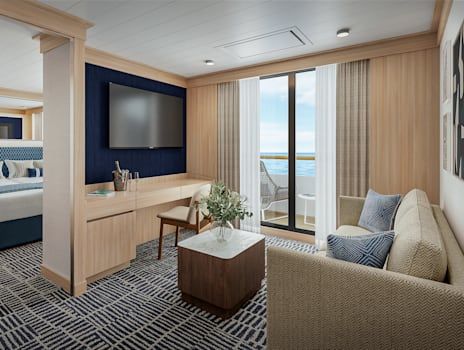
Star Suite
Step into a stylish and bright open living area with a spacious adjacent bedroom. This 380-square-foot suite welcomes you with spectacular views, courtesy of the sliding glass doors that lead out to your private balcony. The outdoor space adds another 110 square feet, enough to sit outside comfortably and enjoy the breeze. The bedroom features an inviting queen bed (convertible into two twin beds if desired) and its own sliding glass door with balcony access, while the bathroom includes a bathtub and walk-in mosaic glass shower with rain head and body jets.
Starting from
Amenities
No amenities details available.
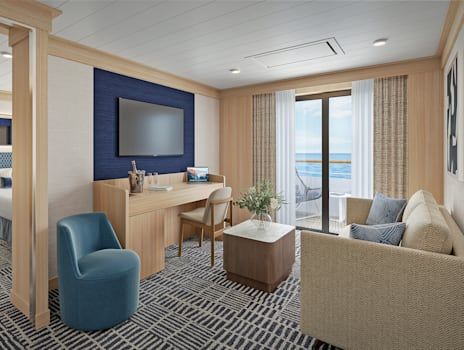
Classic Suite
Step into a stylish and bright open living area with a spacious adjacent bedroom. This 353-square-foot suite welcomes you with spectacular views, courtesy of the sliding glass doors that lead out to your private balcony. The outdoor space adds another 110 square feet, enough to sit outside comfortably and enjoy the breeze. The bedroom features an inviting queen bed that can be converted into two twins if desired, while the bathroom includes a luxurious walk-in mosaic glass shower with rain head and body jets.
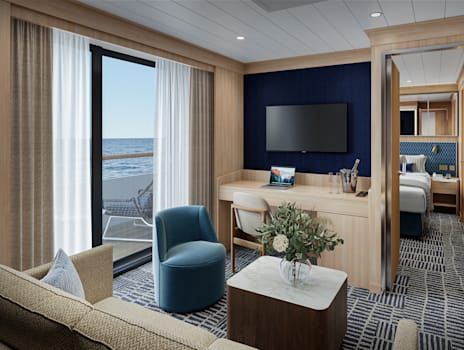
Starting from
Amenities
No amenities details available.
Deluxe Suite
This 288-square-foot suite welcomes you with spectacular views, courtesy of the sliding glass doors that lead out to your private balcony. The outdoor space adds another 110 square feet, enough to sit outside comfortably and enjoy the breeze. The bedroom features an inviting queen bed (convertible into two twin beds if desired) and its own sliding glass door with balcony access, while the bathroom includes a luxurious walk-in mosaic glass shower with rain head and body jets.
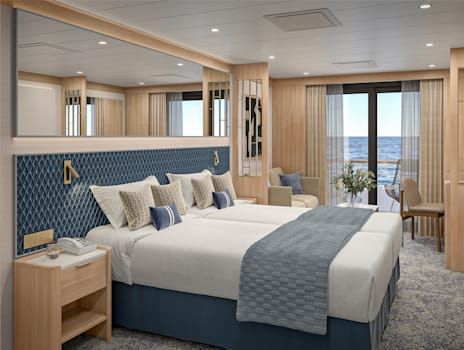
Starting from
Amenities
No amenities details available.
Vista Veranda Suite
Located on deck 7, this 268-square-foot suite welcomes you with stylish comfort and stunning ocean views. Relax on your queen bed (convertible into two twin beds if desired) or lounge in the nearby living area. The outdoor space adds another 55 square feet, enough to sit outside comfortably and enjoy the breeze. In the bathroom, you'll find a luxurious walk-in mosaic glass shower with rain head and body jets.
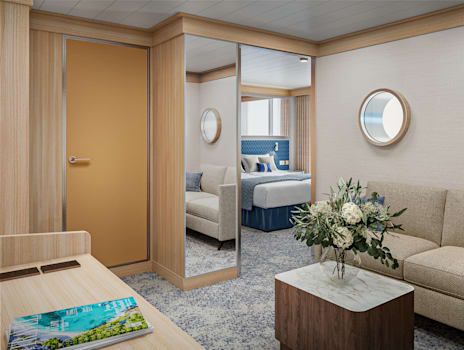
Starting from
Amenities
No amenities details available.
Triple Infinity Suite
This roomy 301-square-foot suite features a wide floor-to-ceiling infinity window in the bedroom, allowing for stunning ocean views. You can even open the top half to enjoy the cool ocean breeze. This suite also features an inviting queen bed (convertible into two twin beds if desired) and a pull-out sofa in the separate living area, allowing for triple occupancy. In the bathroom, you'll find a luxurious walk-in mosaic glass shower with rain head and body jets.
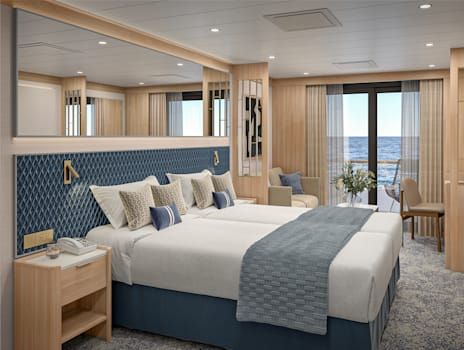
Starting from
Amenities
No amenities details available.
Premier Veranda Suite
Located at the middle of the ship, these 225-square-foot suites welcome you with stylish comfort and beautiful ocean views. Relax on your queen bed (convertible into two twin beds if desired) or lounge in the nearby living area. The outdoor space adds another 55 square feet, enough to sit outside comfortably and enjoy the breeze. In the bathroom, you'll find a luxurious walk-in mosaic glass shower with rain head and body jets.
Starting from
Amenities
No amenities details available.
Premier Veranda Suite VS1
No description available.
Starting from
Amenities
No amenities details available.
Premier Veranda Suite VSS
No description available.
Starting from
Amenities
No amenities details available.
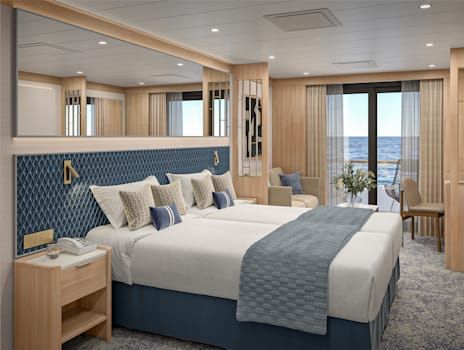
Veranda Suite
Stylish comfort and ocean views welcome you to this 225-square-foot suite. Relax on your queen bed (convertible into two twin beds if desired) or lounge in the nearby living area. The outdoor space adds another 55 square feet, enough to sit outside comfortably and enjoy the breeze. In the bathroom, you'll find a luxurious walk-in mosaic glass shower with rain head and body jets.
Starting from
Amenities
No amenities details available.
Infinity Suite IN1
No description available.
Starting from
Amenities
No amenities details available.
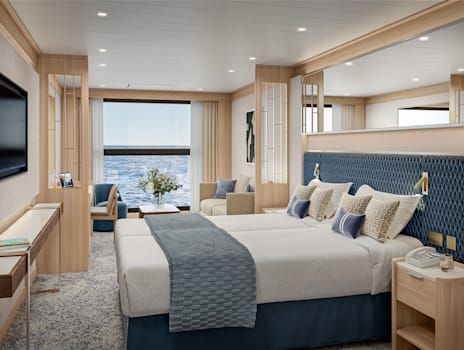
Infinity Suite
This 280-square-foot suite features a wide floor-to-ceiling infinity window that allows for stunning ocean views. You can even open the top half to enjoy the cool ocean breeze. Your suite features an inviting queen bed (convertible into two twin beds if desired), a walk-in mosaic glass shower and a comfortable living area where you can lounge and enjoy the view.
Starting from
Amenities
No amenities details available.
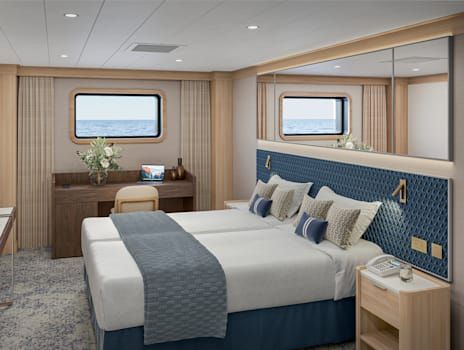
Oceanview Suite
Experience the perfect blend of style and functionality in this thoughtfully designed 203-square-foot suite. The well-planned layout creates an ideal retreat with plenty of natural light, a view of the sea, a walk-in mosaic glass shower and an inviting queen bed (convertible into two twins if desired), perfect for unwinding after a day of fun and exploration.
Available Dates
| Date | Yacht | Starting from | Actions |
|---|---|---|---|
| Oct 25 (Mon) – Nov 4 (Thu), 2027October 25 (Mon) – November 4 (Thu), 2027 | Star Seeker | $14,628 |